It Can Only Last A Lifetime
The Schiavo case is just too easy. The Schiavo case is just too complex. A woman is alive. A woman is barely alive. Someone wants to care for her. Someone wants to kill her. There is a right to live. There is a right to die. The judges are insane. The judges are right.
It would take the wisdom of King Solomon to figure this one out. Or would it? We obviously need better judges, but we also need to decide what is right and wrong. The wisdom of Solomon and the universal truths that guided him haven't changed since he built his temple and judged over his people. They are available to us in the here and now. So, too, are the liberal ideologies and situational relativism that confuses our culture. These are the two sides of judicial temperament.
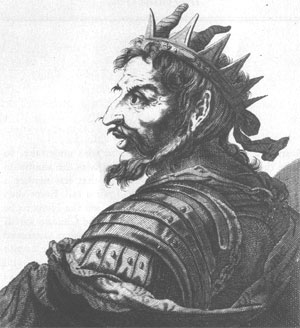
King Solomon stands at the extreme righteous end of the measure of judges.
Give therefore thy servant an understanding heart to judge thy people, that I may discern between good and bad: for who is able to judge this thy so great a people? And God said unto him, Because thou hast asked this thing, and hast not asked for thyself long life; neither hast asked riches for thyself, nor hast asked the life of thine enemies; but hast asked for thyself understanding to discern judgment; (1Ki 3:9,11)
Solomon asked for wisdom to rule according to righteousness. And we still remember his wisdom and his right judgments. He asked for special insight into the universal truths that do not change and do not shift according to our whims. That kind of wisdom is rare today.
Contemporaneous judges rule via social comfort and prevailing attitude. There can be no greater chasm than that between our judges and Solomon.
Millennia stand between us and such Godly wisdom. We are left trying to decide what is right and what is wrong in our world and issues like those of Ms. Schiavo are the crucible in which our assumptions are separated from our facts. We search for facts and we get sophistry. We look for truth and we get rhetoric.
Our media are a font of rhetoric. From the ABC poll that slanted the idea that Terri is brain-dead to CBS posing the issue as a political one, there is no solid logic in the rhetoric that gives direction for the future. Should we, as a culture, find ourselves in the same place sometime in the future, what shall we do? We must explore it now before it overtakes us by renewed surprise.
Rhetoric provides no answers. Rhetoric seeks to persuade. Facing critical and deadly decisions such as those illuminated by Terri Schiavo, we need answers, not persuasion. But rhetoric can provide a venue for discussion. Regardless of it's poor use by our media, rhetoric can provide a useful process. Francis Bacon said, "The duty and office of rhetoric is to apply reason to imagination for the better moving of the will." Standing on the firm foundation of known truths, working with logic and reason, we can apply rhetorical tools as a means to decipher signals from static.
More than one life is at stake in this debate. Most of us are fully unprepared for this situation Once upon us, situations like that of Ms. Schiavo do not allow us much time to consider our options. Like a pilot flying into poor weather, we must sometimes be wary when we are reaching the limits of our abilities or experience. Training and experience teaches the pilot to establish the limits of every theoretical situation. Regardless of what the regulations allow or what the law prohibits, each pilot establishes those limits and decides, beforehand, not to cross them. Therefore, when an emergency arises, or even when some marginal event occurs that could increase his risk, he knows ahead of time how he will react. The choices are made under little stress and with plenty of time to debate. These individual limits are called personal minima.
We must also have personal minima in our day-to-day lives. Otherwise we will encounter a situation, like that facing the husband and parents of Terri Schiavo, where we are making it up as we go. When pilots in bad weather attempt such haphazard approaches, they are called accident statistics. When we personally crash upon our own haphazard attempts to handle crises, our personal lives can do little more than serve as a warning to others. It is much easier to prepare than to clean up the mess afterward. We are engaged, though, in more than risk avoidance. The Terri Schiavo debate demands that we seek, and find, real truths.
The spiritual and philosophical truths we seek must exist completely within the confines of logic and reason -- which are set firmly within objective truth. If logic, within the process of rhetoric, can lead us to a philosophical truth we must avoid sophistry and remain committed to reason. The principle tool of rhetoric, invention, should never push us beyond what is real, but should extend our thoughts to the edge of possibilities. Cleverness is not invention, it is manipulation. We should not be clever, but using our knowledge and understanding, build truth upon truth.
Asking the hard questions and inventing scenarios where our assumptions are tested, we can examine our conclusions for logical integrity. As we invent different situations, we can measure each conclusion for consistency and integrity. Real life may even take us beyond the edge of possibilities. We must, therefore, explore the effects of our beliefs at the edges so we can be prepared to act when the time comes.
We search for philosophical truth that retains its integrity, even out to extremes. We stress-test our ideas. If a position collapses at an extreme, it is no truth. We may use it for a "rule of thumb," but it cannot be truth. Nor can we simply accept a "rule of thumb" when we ultimately seek a truth. All current philosophies proposed and promoted in the Terri Schiavo case collapse under minimal stress; like the central arguments about Ms. Schiavo.
In her case and many like hers, some medical ethicists suggest that there exists some point where life is not worth living. This is the current philosophy supporting most rationalizations of Ms. Schiavo's right to die. Objective truth demands, then, that there exists some identifiable point of demarcation between the life that is worth living and the life that is not worth living. We should be able to firmly fix that point, either by observation or analysis. However, we cannot.
If we say the point exists where mechanical means are continually used to support life, then Terri Schiavo is on the side that is worth living and Christopher Reeve was on the side that is not. If we fix the point where food and water must be administered for life to continue then both Terri Schiavo and every suckling baby falls on the side of the life not worth living. We must start adding conditions and exceptions to maintain our extemporaneous and shifting sense of control. We quickly walk away from reason and logic and wrap ourselves in unsupportable opinions.
These irrational beliefs cannot be the kind of truth for which everyone is looking. After some contemplation, only two positions can long stand the stress of such analysis.
- All life -- even marginal life -- is precious.
- All life -- even the ideal life -- is worthless.
The first position that retains integrity is that of ultimate, universally precious life. In this philosophy all life, even that of brain damaged and severely handicapped men and women, is precious. This position provides clear, logical, and consistent guidance in the cases like Ms. Schiavo. It provides clear, logical, and consistent guidance in cases like Christopher Reeve or Dr. Stephen Hawking. It provides clear, logical, and consistent guidance, even in cases of severely brain-damaged children who will never even show any response to stimuli and require round-the-clock care. It even provides clear guidance for cases where a person is living a normal, unremarkable life.
The only other position that retains integrity is that of the worthless life. In this philosophy all life is transitory, limited, and is of no supernatural consequence. The living do so in a meaningless state of eventual termination. Living is meaningless. Dying is meaningless. Any incompetence or weakness is an opportunity to humanely let the suffering die.
This position holds that there are no interim decisions about quality of life or what constitutes an extraordinary effort to extend life. There is no life that has any quality. All efforts to extend life are extraordinary. The only life worth saving, therefore, is the life that does not need saving. Vaccinations, antibiotics, defibrillators, and all manner of respirators and feeding tubes qualify as extraordinary actions to extend life. Denial of any of these resources -- and many more -- would constitute logical actions toward a worthless life.
Society is not founded on the worthless life, so the concept may be a little shocking. But it is logically consistent to the extremes. The baby that cannot survive outside of his mother's womb would be considered incompetent and termination would be logical. The grandparent who could not open a can of beans would be considered weak. Termination of the weak would be considered humane.
It is certainly beastly, but it is consistent.
Unfortunately, as a culture we do not like the idea of the precious life, either. We, therefore, perform the cognitive soft-shoe-shuffle and pick and choose based on the situation. Questions arise and we try to mix and match to sound compassionate and simultaneously distant. The result is a jumble of irrational, inconsistent, and contradictory laws, phobias, decisions, and precedence that cannot be reconciled.
There cannot be two more divergent possible views about life's value than those above. Both stand the scrutiny of logical exercise. One, though, sounds better than the other.
Solomon has been in his grave more than 2,800 years. You must judge. The precious life stands on one side. The worthless life stands on the other. Both argue, logically, for the life of Terri Schiavo -- possibly even for your life, if not more.
Solomon's throne is empty. His bench is silent. You decide.
posted by Dexter Cogni at
8:37 PM


<< Home